
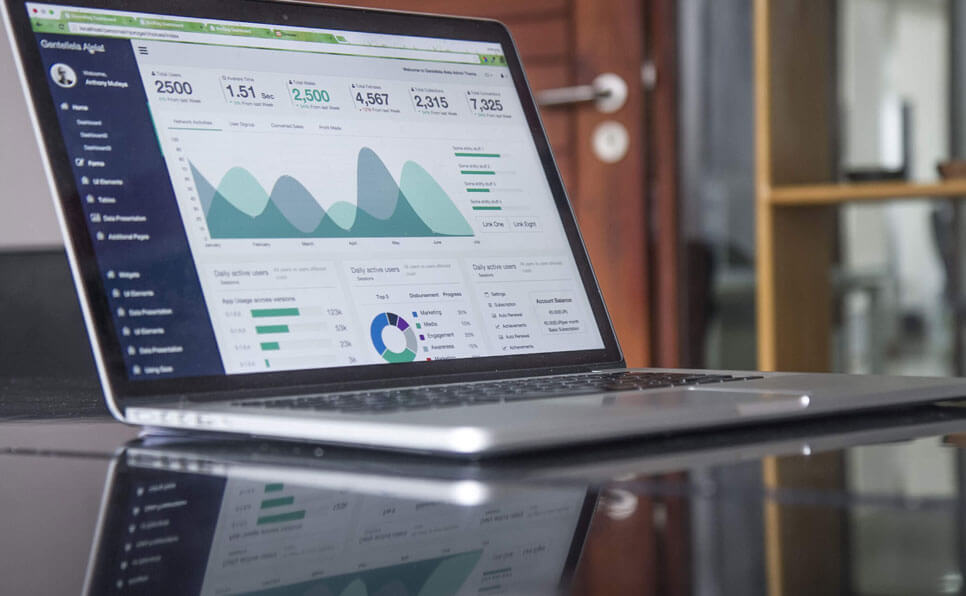
The stock market is increasingly shaped by data, algorithms, and automation. What was once dominated by manual analysis and human intuition is now heavily influenced by artificial intelligence, machine learning, and real-time analytics. For modern investors, understanding this shift is becoming essential—not optional.
AI-driven investing is no longer limited to hedge funds or large institutions. Today, advanced analytics tools are accessible to private investors, reshaping how decisions are made across the entire market.
From Charts to Intelligent Analysis
Traditional stock analysis relied heavily on historical charts, ratios, and human interpretation. While these methods remain relevant, AI enhances them by identifying patterns that are invisible to the human eye.
Modern systems can analyze:
- Millions of data points simultaneously
- Market sentiment from news and social media
- Correlations across global markets
- Historical behavior during similar market conditions
In the short term, this enables faster reactions. In the long term, it improves strategic consistency.
Algorithmic Trading and Market Speed
Algorithmic trading now accounts for a significant portion of daily market volume. These systems execute trades automatically based on predefined rules, price movements, or market signals—often within milliseconds.
While this increases liquidity and efficiency, it also introduces new dynamics:
- Faster market reactions
- Short-term volatility spikes
- Reduced impact of emotional trading
For long-term investors, understanding this environment helps explain sudden price movements that may have little to do with company fundamentals.
AI for Private Investors
What makes this trend especially relevant today is accessibility. Retail investors can now use platforms that integrate AI-based insights, portfolio analysis, and risk assessment tools that were previously unavailable outside professional circles.
Common applications include:
- Portfolio diversification suggestions
- Risk exposure analysis
- Trend detection and alerts
- Scenario simulations
AI does not replace decision-making—it enhances it.
Risks of Blind Automation
Despite its advantages, AI-driven investing is not without risks. Algorithms operate based on historical data and predefined assumptions. When markets behave unexpectedly, automated systems can amplify errors instead of preventing them.
Overreliance on automation may lead to:
- Herd behavior driven by similar models
- Reduced critical thinking
- False confidence in short-term predictions
Human oversight remains essential, especially during periods of market stress.
Long-Term Perspective Still Wins
AI excels at processing information, but it does not eliminate market cycles, economic fundamentals, or business quality. Long-term stock market performance is still driven by innovation, earnings growth, and economic value creation.
Investors who combine AI tools with long-term thinking gain the strongest advantage. Technology improves execution, but patience and discipline still determine results.
The Future of Stock Market Investing
AI-driven investing is not a temporary trend—it represents a structural change. Markets will continue to evolve toward higher efficiency, faster information flow, and deeper data integration.
Those who understand how to use technology without becoming dependent on it will be best positioned to navigate future market cycles.
Conclusion
The stock market is entering a data-dominated era. AI and analytics are transforming how investments are evaluated, executed, and managed. For investors, the goal is not to compete with machines—but to use them intelligently.
In a market where information moves instantly, combining human judgment with data-driven tools is becoming the new standard for sustainable, long-term success.