
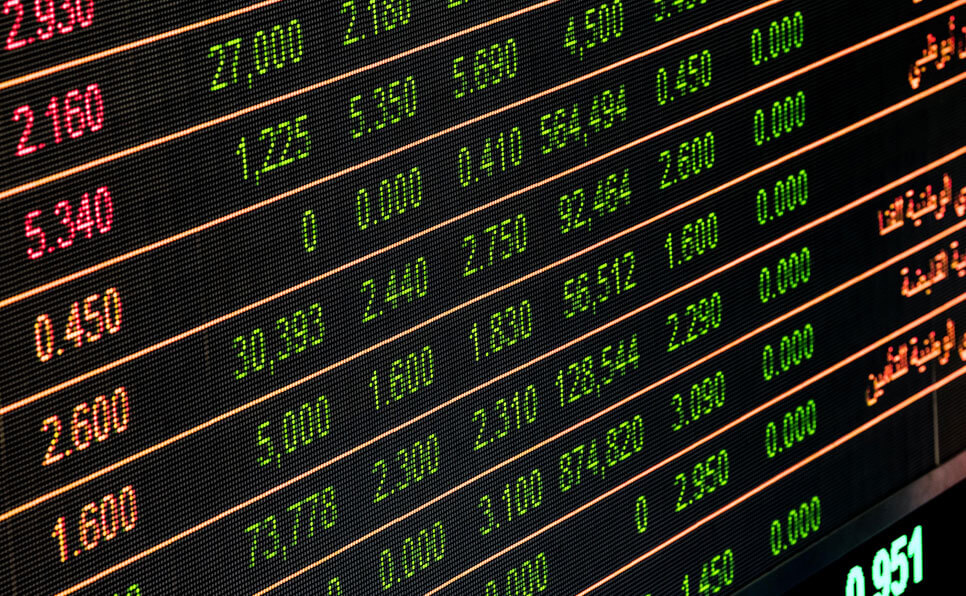
The stock market is often perceived as chaotic—numbers flashing, prices moving rapidly, and sentiment shifting by the minute. Yet behind this apparent disorder lies a system driven by patterns, psychology, and long-term value creation. For informed investors, volatility is not a threat, but a source of opportunity.
Understanding how to navigate market movements is essential for both short-term positioning and long-term wealth building.
Market Volatility Is Not the Enemy
Price fluctuations are a natural part of the stock market. Economic data, earnings reports, interest rate decisions, and global events constantly influence valuations. In the short term, this creates uncertainty and emotional reactions among market participants.
However, volatility only becomes dangerous when investors react impulsively. Those who understand that price swings reflect changing expectations—not necessarily changing fundamentals—are better positioned to make rational decisions.
Volatility rewards preparation, not prediction.
Short-Term Noise vs. Long-Term Value
Daily market movements often have little to do with a company’s actual performance. Headlines, speculation, and short-term trading strategies can push prices far above or below intrinsic value.
Long-term investors focus on:
- Business fundamentals
- Revenue and earnings growth
- Competitive positioning
- Balance sheet strength
By separating noise from value, investors avoid the trap of buying hype or selling fear.
The Role of Market Cycles
Markets move in cycles. Bull markets encourage optimism and risk-taking, while bear markets test patience and discipline. Each phase serves a purpose.
In expansion phases, capital flows freely and valuations rise. In contraction phases, weak businesses are exposed and strong ones become undervalued. Historically, some of the best long-term returns are generated by investments made during periods of pessimism.
Timing the exact bottom is impossible. Positioning consistently across cycles is not.
Risk Management Over Prediction
Successful investing is less about forecasting the future and more about managing risk. No strategy eliminates uncertainty, but disciplined approaches reduce exposure to avoidable losses.
Effective risk management includes:
- Diversification across sectors and assets
- Defined position sizes
- Long-term investment horizons
- Avoiding excessive leverage
Investors who survive downturns remain positioned to benefit from recoveries.
Emotional Discipline as a Competitive Advantage
The greatest enemy of stock market returns is not volatility—it is emotion. Fear leads to panic selling, while greed encourages overexposure at market peaks.
Professional investors rely on systems, rules, and predefined strategies to reduce emotional influence. Private investors who adopt similar discipline often outperform those chasing trends or reacting to headlines.
Calm decision-making compounds over time.
Technology and Market Accessibility
Modern technology has lowered barriers to market participation. Real-time data, low-cost trading platforms, and global access empower individual investors more than ever.
However, accessibility also increases noise and speculation. Information alone does not create an edge—interpretation and discipline do.
Long-term success still favors those who think in years, not days.
Conclusion
The stock market is not a casino, nor is it a straight line upward. It is a dynamic system shaped by economics, psychology, and time. Volatility is inevitable, but losses are not.
Investors who focus on fundamentals, manage risk carefully, and maintain emotional discipline turn market fluctuations into long-term opportunity. In a world of constant movement, patience and strategy remain the most valuable assets of all.